Trade apprenticeships need bookwork to count toward a qualification. Unit standards, written submissions, an administrative layer sitting alongside the physical work.
For apprentices who learn by doing, especially the dyslexic ones, the bookwork is the stumbling block, not the trade itself. Capable tradespeople drop out or stall because the writing gets in the way of the qualification.
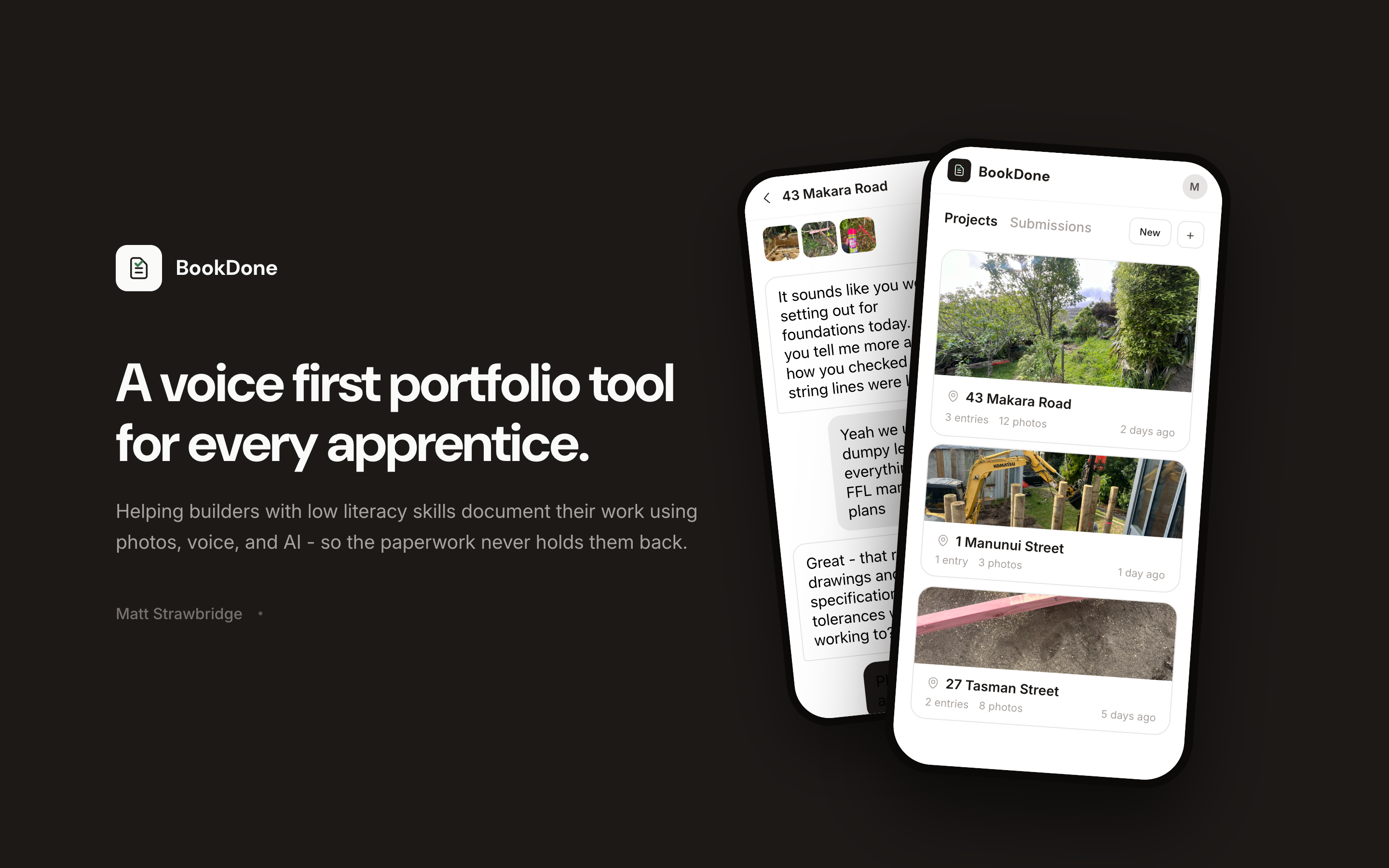
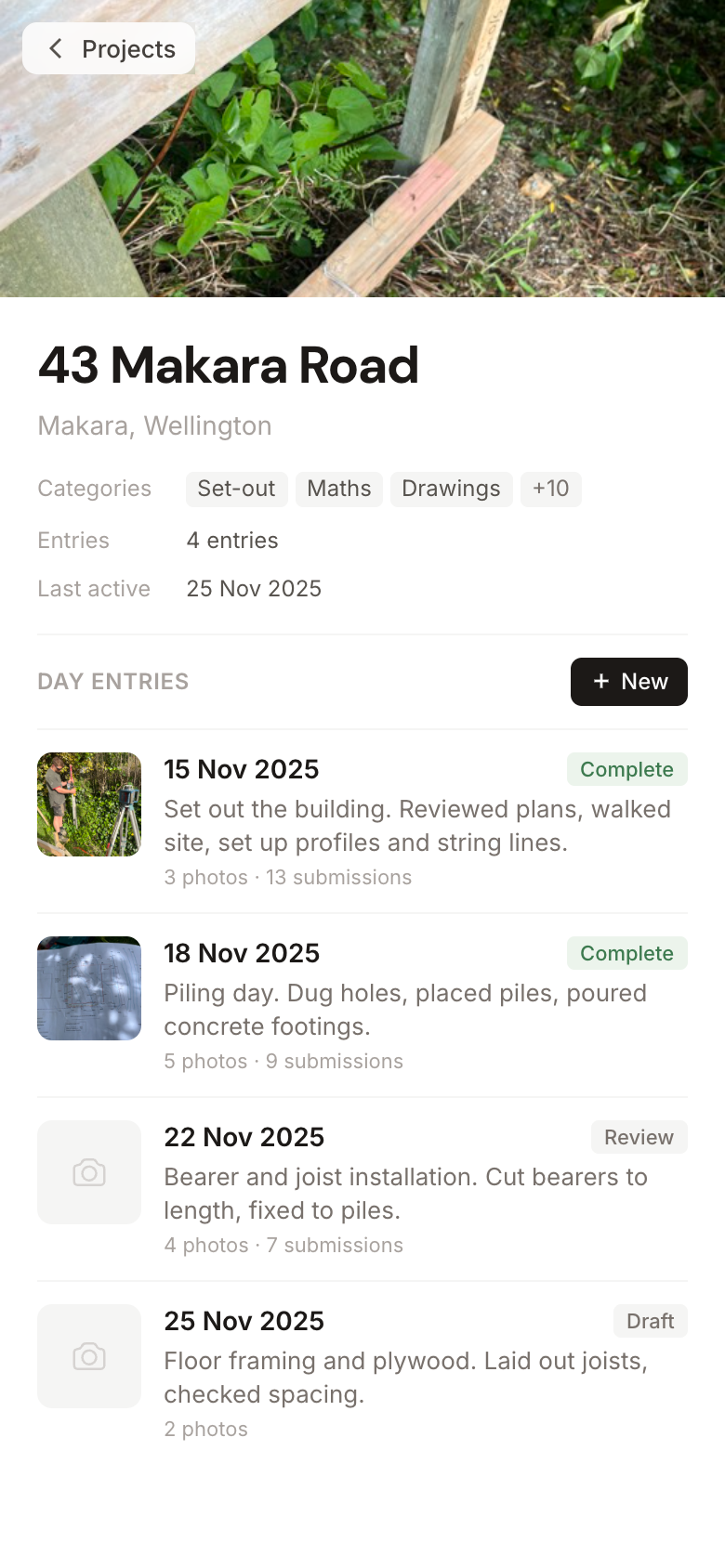
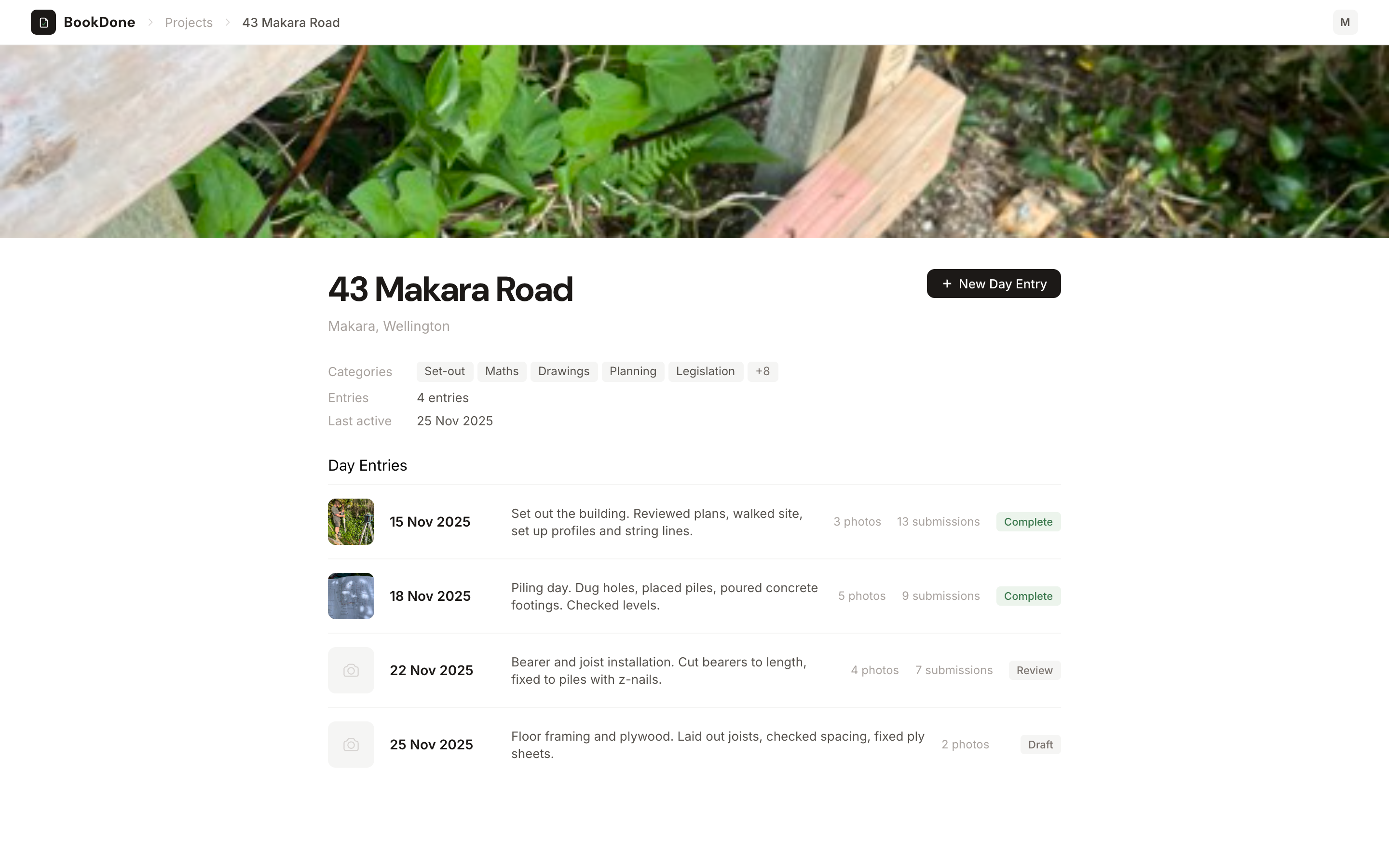
The apprentice takes photos of what they did that day, records a voice note about it, and answers a few follow-up questions. Five minutes at the end of the day. BookDone turns that into formatted BCITO submissions across every unit standard the day's work covers.
I built this because I needed it. I could do the work. I just could not get it into the bookwork the way the system wanted.
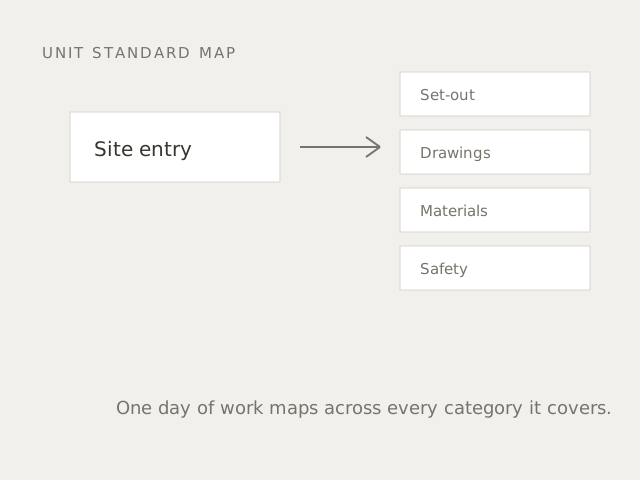
One entry maps into more than a dozen unit standards. Set-out, maths, drawings and specifications, legislation, the lot. The apprentice does not need to know which standards their day covers. BookDone works that out from what they did.
- Voice note and site photos captured on the phone. No desk required.
- Transcription and visual context held together, so the system understands what the apprentice actually did, not just what they said.
- Follow-up questions generated automatically to fill gaps the apprentice did not know to cover.
- Categorisation against BCITO unit standards happens on the backend. One day of work maps into every category it covers.
- Submissions come out in the format BCITO expects, ready for the apprentice to review and send.
The manual version worked for me, start to finish, through my own qualification, and I still use the app personally. I built it to prove the concept and have shown it to BCITO, and that is as far as it has gone for now.
- Personal use case first. I built it for me, ran my own qualification through it, then opened it up.
- Voice and photos in, paperwork out, matching how apprentices actually work.
- Categorisation handled automatically, so the apprentice does not need to memorise unit standards to benefit from it.
- Priced per learner, not per enterprise seat, so it scales to the size of the apprentice population.