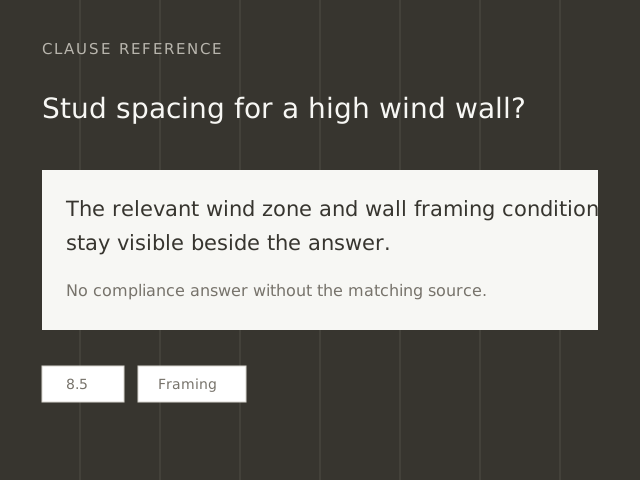
"What stud spacing do I need in a high wind zone" should take seconds. In practice it meant flipping through tables, cross-referencing clauses, or a call to someone who had the document memorised. Builders, designers, DIYers, and junior engineers all lose time on lookup.
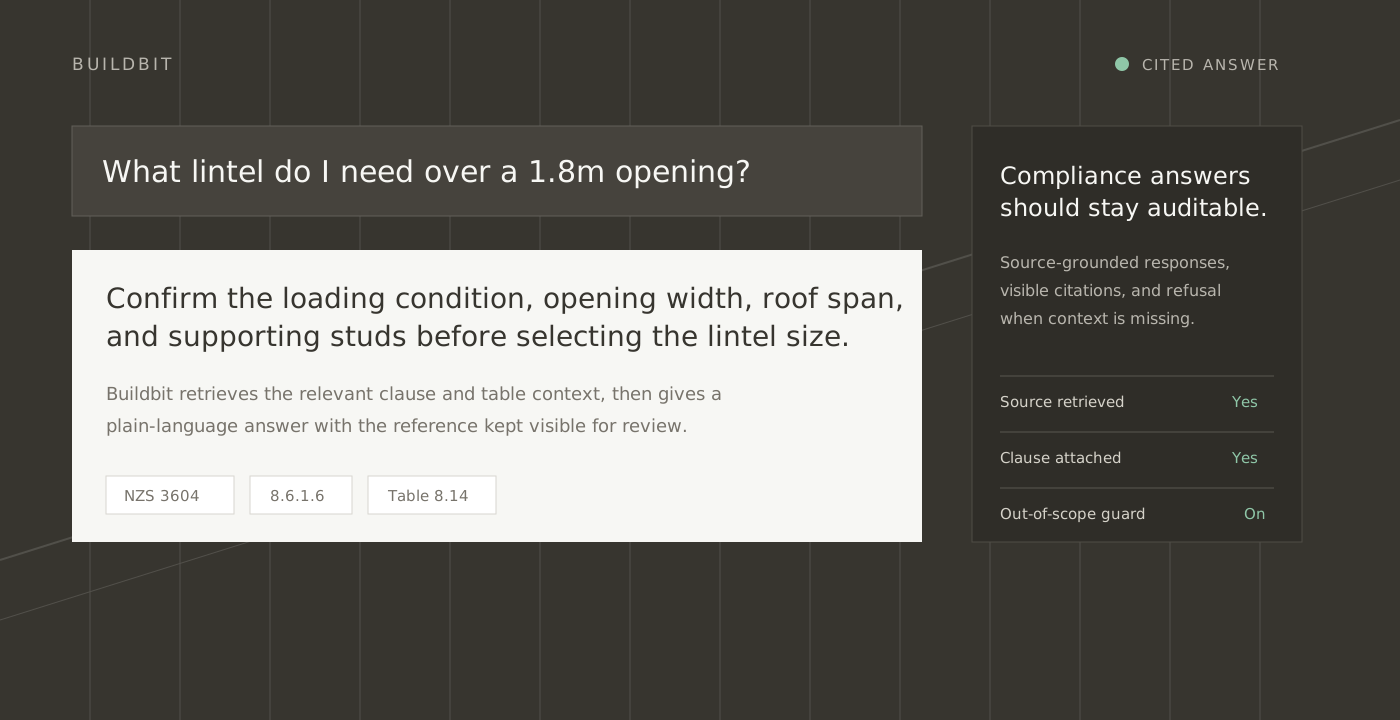
An AI trained on the full text of NZS 3604, under formal licence from Standards New Zealand. Users ask the way they would actually ask. Buildbit finds the answer and cites the clause.
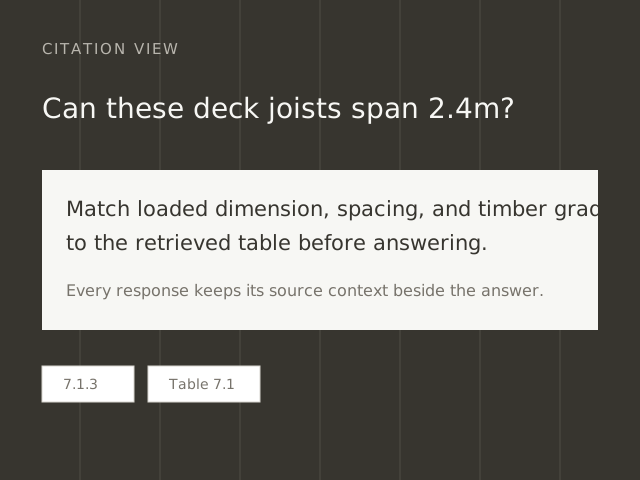
Someone wants to build a deck. They want to know the span. They should be able to ask, not search.
This was built before "RAG" was common vocabulary; the approach I settled on then is the one the industry settled on two years later.
- The standard is chunked into units that preserve clause hierarchy, so every answer points to the exact section.
- Semantic search means "rafter span for a 4.5-metre roof" finds the right table without needing the standard's terminology.
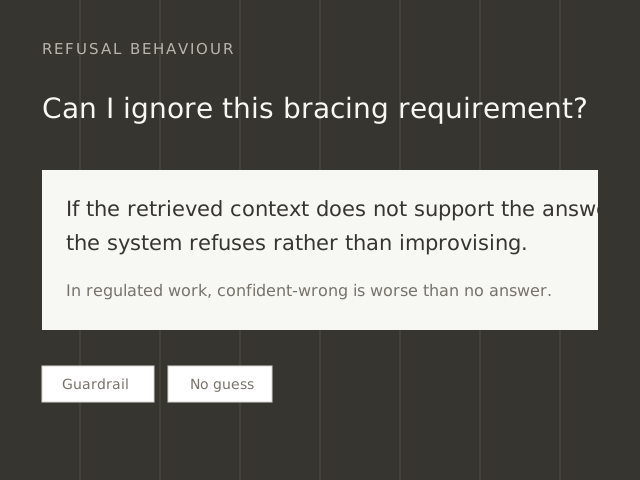
- The model only answers from retrieved chunks, with a clause reference on every response and a refusal for anything out of scope.
NZS 3604 becomes askable. Questions that used to take fifteen minutes come back with the clause attached in seconds. A standard once accessible only to people who already understood its structure, searchable in plain language.
The plan was to extend the approach across other NZ standards. The technique worked. The limitation was the models.
Answers landed at roughly 97% correct. In compliance, the bar is 100%, and the gap is exactly where a useful tool turns into a liability. I paused the expansion rather than ship something that demoed well and failed in the edge cases. The model layer needed another generation to catch up.
- Formally licensed from Standards NZ.
- Citation-first, so every answer is auditable.
- Refusals over guesses, because a confident wrong answer is dangerous in regulated work.