Visualisation is a bottleneck. Every design cycle, someone is either paying for outsourced renders or losing a day to them internally.
The generic AI image tools do not fit. They are not precise enough for a client meeting, and they are not built for how a firm actually works.
An AI visualisation platform built for architecture practice. Two pillars, a full pipeline, and the architect in control of every output.
A client-facing rendering workflow needs consistent outputs, controlled revisions and reliable delivery.
- AIR: sketches and references to presentation-ready renders, iterated in the same workspace.
- MOV: cinematic walkthroughs, drone-style pans, and social-ready clips straight from the render.
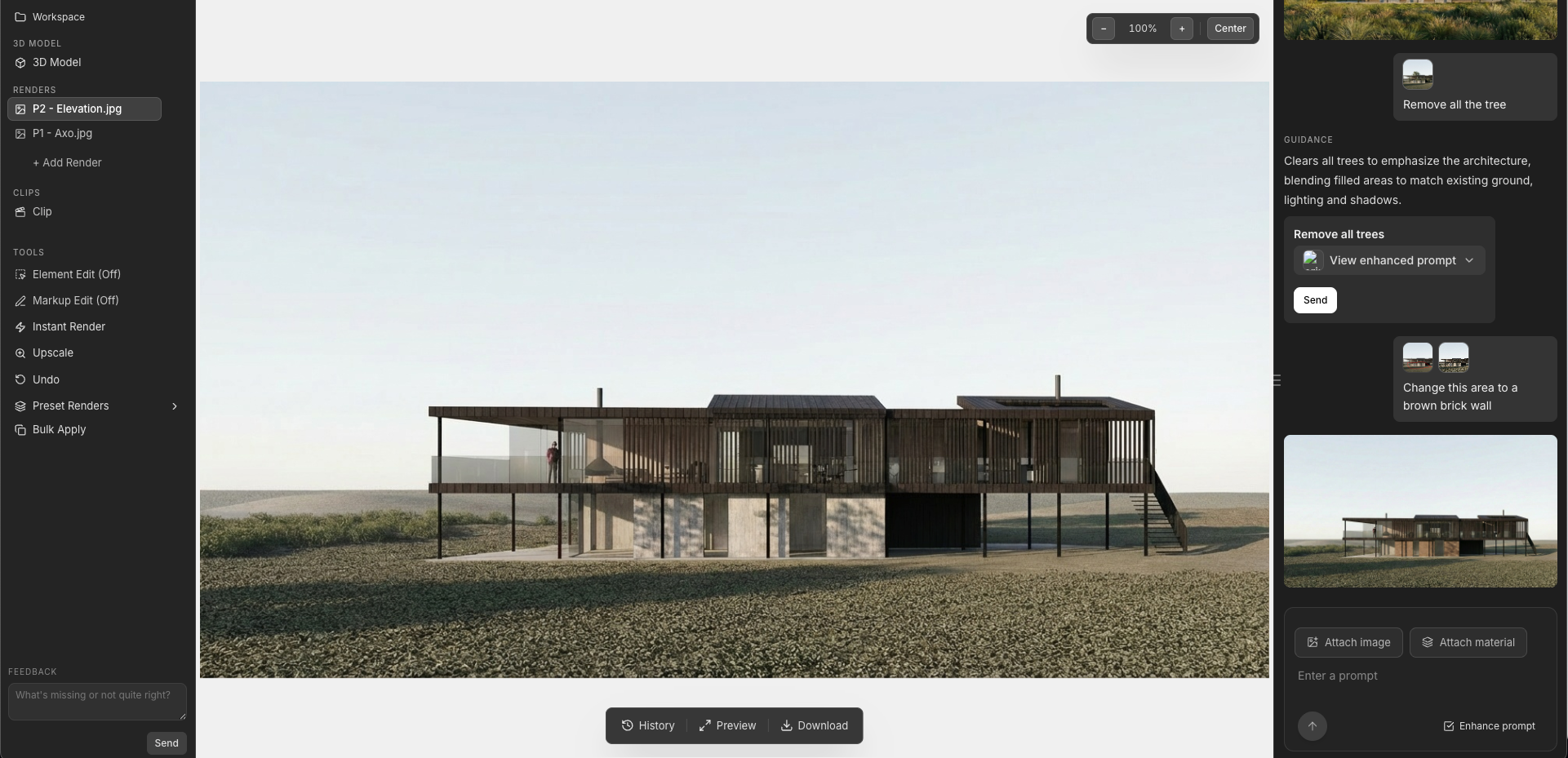
- Element-level editing, so one component can change without touching the rest.
- Upscale, history, and prompt help, so nothing clever is required to get a clean result.
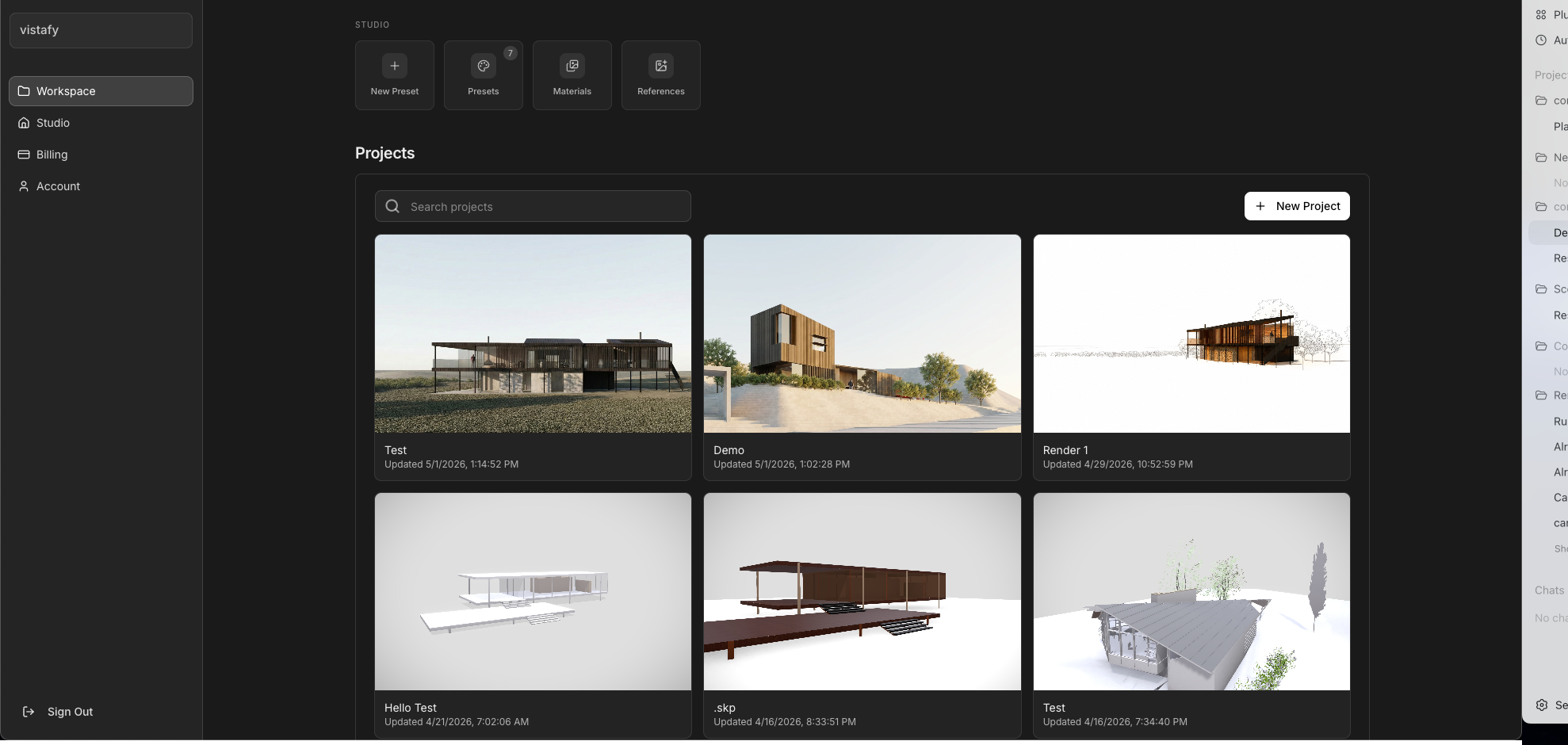
The workspace is organised around the way architects actually iterate: projects first, renders and clips underneath, then targeted tools for prompt direction, markup edits, materials, references, upscaling, and download.
That matters because the job is holding context across the messy middle of design review, visual iteration, and client presentation, and the workspace is built around that job.
- A vision model reads the input first, whether a sketch, photo, or reference, and understands geometry, materials, and intent before any rendering starts.
- The prompt is written from what the system saw, not from what the user typed. The architect describes an outcome in plain language, and the system translates that into a grounded instruction.
- A second agent reviews the draft render against the original input, catches drift, and feeds corrections back in before the user sees anything.
- Element-level edits run as a targeted pass. The surrounding image stays fixed, only the requested component changes, and style is held constant across the project.
- Motion is its own pipeline on top of the renders. Video fails differently from stills, so it gets its own stack instead of being a checkbox on the image model.
Vistafy is in production with architects from solo practitioners through to firms rolling it across full teams. Hundreds of professionals use the platform and have generated thousands of images.
Work that used to live at a slow and expensive vendor now happens inside the practice. The iteration loop closes from days to minutes.
Priced from freelancer through firm-wide rollout, so the same platform scales with the practice.
- Built for architects first, not retrofitted from a generic image tool.
- Element-level control, so the AI does not take over the creative decisions.
- Motion in the same platform as rendering, not a second tool.
- Priced for the whole firm ladder, solo through a hundred seats.